In 2026, living room decoration is moving toward warmth, personality, and thoughtful handmade details. The Best Home Craft Ideas For Living Room Decoration can transform an ordinary space without making it feel overly designed. A woven wall hanging, painted terracotta vase, or hand-sewn cushion can add texture beside a neutral sofa. Small changes matter.
William Morris, a leading figure in the Arts and Crafts movement, offered enduring guidance: “Have nothing in your house that you do not know to be useful, or believe to be beautiful.” His principle remains practical today. It encourages homeowners to choose crafts that serve a purpose, tell a story, or create genuine comfort. A reclaimed-wood tray may organize coffee-table items. A clay candleholder may bring softer evening light. A framed textile sample may preserve a meaningful memory.
This guide explores accessible projects for different skill levels, budgets, and room sizes. Each idea considers materials, durability, visual balance, and safe use around children or pets. Expect natural fibers, earthy colors, recycled materials, and flexible designs that can change with the seasons. Nothing needs to look factory-perfect.
That is part of the charm.
A slightly uneven stitch can show patience. A brush mark can reveal the maker’s hand. Still, handmade does not mean careless. Measure twice, test colors near a window, and allow adhesives or finishes to cure fully. Some projects may need revision after seeing them in the room. That is useful feedback, not failure. Good decoration grows through observation, practice, and honest reflection.
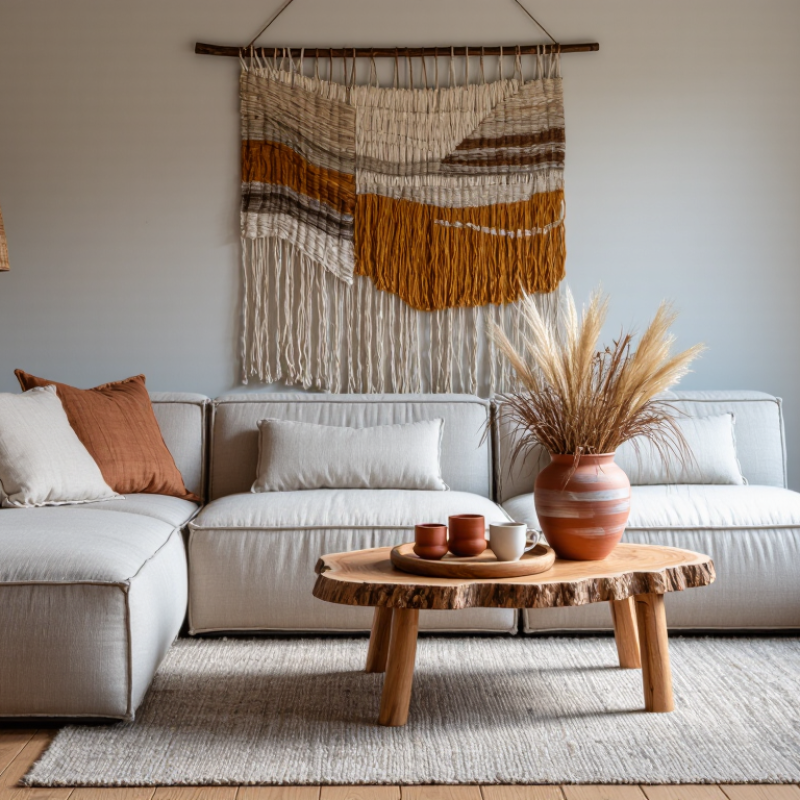
2026 Top Home Craft Ideas for Living Room Decor
Choosing a 2026 Living Room Craft Style and Color Palette
A strong 2026 living room begins with a clear craft attitude, not scattered decoration. Handwoven wall pieces, visible wood grain, repaired ceramics, and uneven glaze surfaces support a warm, human style. The American Society of Interior Designers’ 2025 Trends Outlook highlights nature-connected materials and flexible spaces as continuing priorities. That supports a relaxed craft direction with practical value. Start with three colors: a grounded base, a soft supporting shade, and one restrained accent. Try clay beige, muted sage, and ink blue. Keep the brightest tone on smaller objects, such as a stitched cushion or painted tray.
Color should also respond to comfort and air quality. The United States Environmental Protection Agency reports that indoor pollutant levels can be two to five times higher than outdoor levels. Choose low-odor finishes, washable textiles, and well-ventilated craft materials. Natural fibers feel inviting, but they still need regular cleaning. I often select too many earthy colors at first. The room becomes muddy. A better method is to test fabric, timber, and paint samples beside the largest sofa in morning and evening light. Leave them there for two days. Shadows change everything. A slightly imperfect handmade bowl can become the palette’s visual anchor, even when its color is not perfectly matched.
| Craft Style | Recommended Project | Core Color Palette | Primary Materials | Skill Level | Estimated Time | Estimated Material Cost | Best Living Room Placement | Durability | Eco-Friendly Features |
|---|---|---|---|---|---|---|---|---|---|
| Warm Minimalist | Hand-painted abstract canvas with simple geometric shapes |
Warm Beige Soft Cream Charcoal |
Stretched canvas, water-based acrylic paint, wooden frame | Beginner | 2–4 hours | $25–$60 | Above a sofa or on a narrow feature wall | High | Water-based paint and reusable brushes reduce solvent use |
| Biophilic Craft | Pressed-leaf wall art arranged in a modular grid |
Sage Green Sand Olive |
Pressed leaves, archival paper, glass-front frames | Beginner | 3–6 hours, excluding drying time | $30–$75 | Near natural light without direct, intense sun | Medium–High | Uses naturally fallen plant material and can avoid synthetic décor |
| Textured Neutral | Woven wall hanging with layered natural fibers |
Ivory Oat Light Clay |
Cotton cord, wool yarn, unfinished wooden dowel | Beginner–Intermediate | 4–8 hours | $35–$90 | Above a console, reading chair, or sideboard | High | Natural fibers are renewable and the dowel can be reused |
| Earthy Mediterranean | Handmade clay-look candleholder or sculptural vessel |
Terracotta Chalk Stone |
Air-dry clay, mineral pigments, non-toxic sealer | Intermediate | 5–8 hours, plus curing time | $20–$55 | On a coffee table, mantel, or open shelf | Medium | Small-batch handcrafting can minimize packaging and waste |
| Soft Vintage Revival | Upcycled fabric cushion covers with envelope closures |
Muted Olive Faded Rust Warm White |
Repurposed cotton or linen fabric, thread, wooden buttons | Intermediate | 2–5 hours per cover | $10–$40 per cover | On a sofa, window seat, or accent chair | High | Extends the life of existing textiles and reduces fabric waste |
| Coastal Contemporary | Decorative rope-and-driftwood mirror frame |
Dusty Blue Sea Salt Natural Wood |
Mirror, reclaimed wood, cotton rope, water-based adhesive | Intermediate | 4–7 hours | $45–$120 | Opposite a window or above a compact console | High | Reclaimed wood gives discarded material a second use |
| Modern Folk | Decorative painted wooden panels inspired by folk motifs |
Muted Blue Clay Pink Bone White |
FSC-certified or reclaimed wood, water-based paint, wax finish | Beginner–Intermediate | 3–6 hours | $30–$80 | As a three-panel arrangement above a media cabinet | High | Wood panels can be refinished or repainted for future styles |
| Calm Japandi-Inspired | Minimalist branch arrangement in a textured handmade vase |
Greige Ink Gray Muted Green |
Air-dry clay, fallen branches, natural twine, matte sealer | Beginner | 3–5 hours, plus curing time | $15–$45 | On a low shelf, sideboard, or uncluttered corner | Medium–High | Uses foraged branches and requires no fresh floral replacement |
| Color-Block Contemporary | Painted arch-shaped shelf or floating display ledge |
Burnt Orange Slate Blue Soft White |
Wood board, low-VOC paint, concealed brackets | Intermediate | 5–9 hours | $40–$100 | On a small accent wall for books and ceramics | High | Low-VOC finishes improve indoor-air considerations |
| Tactile Recycled Craft | Recycled-paper relief artwork in a deep-set frame |
Paper White Pale Sage Dusty Peach |
Recycled paper, starch paste, archival backing board | Beginner–Intermediate | 4–7 hours, plus drying time | $15–$50 | Gallery wall, hallway transition, or reading nook | Medium | Transforms paper scraps into lightweight decorative art |
Use a three-panel textile design with linen, cotton cord, and a slim wood frame. Leave small irregularities visible.
Create paper cutouts first. Test the layout on the wall before cutting wood or fabric.
Leave 15 to 25 centimeters above the furniture. Measure carefully. I often hang pieces slightly too high.
Make a shallow shelf from sealed plywood. Display one ceramic form, a dried branch, and a framed sketch.
Keep about one-third of each shelf open. Place heavier objects lower. Every shelf is not a display window.
Repeat restrained colors, such as sand, charcoal, and muted green. Mix smooth ceramics with rough textiles.
Place coasters, remotes, and a small vase inside a shallow tray. Rounded edges work better near children or narrow paths.
Add a stitched cushion, compact footstool, or fabric magazine sling. Comfort matters more than beige decoration. I sometimes over-style corners and remove one object later.
Discover the Best Home Craft Ideas For Living Room Decoration by beginning with a clear 2026-inspired style and a harmonious color palette. Whether you prefer natural warmth, soft minimalism, or expressive mixed textures, your choices should reflect the atmosphere you want to create. Gather sustainable materials such as reclaimed paper, natural fibers, responsibly sourced wood, and reusable containers, along with essential tools for cutting, shaping, painting, and assembling.
Transform these materials into handmade wall art, sculptural accents, personalized frames, and other statement pieces that add character to the room. You can also craft practical details for shelves, coffee tables, and seating areas, including decorative trays, fabric cushions, organizers, and small storage solutions. Finally, arrange each DIY piece with attention to balance, scale, comfort, and visual flow. Combining useful accents with personal artwork allows your living room to feel welcoming, creative, and genuinely connected to your individual taste.

 RUX Home Crafts